





Introduction
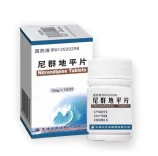
Nitrendipine Tablets.Main Ingredient: Nitrendipine, which belongs to the dihydropyridine class of calcium channel blockers.
Details
【Drug Name】
Generic name: NitrendipineTablets
English name: Nitrendipine Tablets
【Ingredients】Nitrendipine
Chemical name: 2,6-dimethyl-4- (3-nitrophenyl) -1,4-dihydro-3,5-Pyridine dimethyl ester
Molecular formula: C18H20N2O6
Molecular weight: 360.37
【Appearance】A light yellow tablet.
【Indications】Hypertension.
【Specification】10mg.
【Usage and dosage】 Orally, normally adult dosage starts with 10mg once a day, and adjust the dosage based on the patient's treatment response. If the therapeutic effect is not achieved, it can be increased to 10mg once, twice a day. The maximum dosage can be 20mg once, twice a day.
【Adverse reactions】Less common are headaches and facial flushing. Rare occurrences include dizziness, nausea, hypotension, ankle swelling, angina attacks, and transient hypotension. Allergens to this product may develop allergic hepatitis, rash, and even exfoliative dermatitis.
【Contraindication】It is contraindicated for patients who are allergic to this product or have severe aortic valve stenosis.
【Precautions】1. In a few cases, there may be an increase in blood alkaline phosphatase.
2. When liver function is impaired, the blood drug concentration may increase, and when kidney function is impaired, the impact on pharmacokinetics is small. Therefore, this product should be used with caution.
3. The vast majority of patients only experience tolerable mild hypotension after taking this medicine, but a few may experience severe systemic hypotension symptoms. This reaction often occurs during the initial adjustment of drug dosage or when increasing drug dosage, especially when combined with beta blockers. Therefore, blood pressure should be measured regularly during the use of this product.
4. It has been proven that a very small number of patients, especially those with severe coronary artery stenosis, have an increased incidence of angina or myocardial infarction during the use of this medicine or increasing doses. The mechanism is still unclear. Therefore, regular electrocardiograms should be performed during the use of this product.
5. A small number of patients who receive beta blockers may develop heart failure after starting to take this medicine, and patients with aortic stenosis are at a greater risk.
【Pregnant and lactating women】The research on the application of this product in pregnant women is not sufficient, and there have been no problems with its clinical use, but attention should be paid to adverse reactions.
【Children】 Not clear.
【Elderly Patients】After taken the medicine, the elderly have a higher blood drug concentration, but the half-life is not prolonged, so it is advisable to reduce the dosage appropriately; Individuals taking beta blockers should be cautious when adding this product. The combination should be started from a small dosage, to prevent inducing or worsening systemic hypotension, increasing the incidence of angina, heart failure, and even myocardial infarction. The recommended initial dose for elderly patients is 10mg per day (1 tablet).
【Drug Interactions】
1. B-receptor blockers: The vast majority of patients taking this medicine can enhance its antihypertensive effect and alleviate the occurrence of tachycardia after lowering blood pressure; However, some patients may experience and worsen systemic hypotension, heart failure, and angina.
2. Combination therapy with angiotensin-converting enzyme inhibitors has better tolerance and enhanced antihypertensive effects.
3. Long acting nitrates: The combination therapy has good tolerability, but there is still a lack of literature evaluating the effectiveness of this combination therapy in controlling angina.
4. Digitalis: Some studies suggest that taking this medicine can increase the plasma concentration of digoxin in combination, with an average increase of 45%. Some studies suggest that digoxin does not increase plasma concentration and toxicity. Remind us to monitor the blood concentration of digoxin during initial use, dose adjustment, or discontinuation of nitrendipine to prevent excessive or insufficient digoxin.
5. Dicoumarin: There are no reports indicating that the combination of nitrendipine can increase the thrombin time of legume anticoagulant drugs. At present, the interaction between them cannot be confirmed.
6. Cimetidine: Due to the fact that cimetidine can mediate the inhibition of liver cytochrome P450 enzymes, the first pass effect of nitrendipine is altered. It is recommended the patients are receiving cimetidine treatment to adjust the dosage of nitrendipine.
【Overdosage】Existing literature suggests that increasing dosage can lead to excessive peripheral vasodilation, secondary or prolonged systemic hypotension. Patients who experience significant hypotension due to drug overdose in clinical practice should receive timely cardiovascular support therapy while monitoring their cardiovascular function. The drug clearance rate decreases in patients with liver dysfunction.
【Pharmacology and toxicology】
Pharmacology:
1.This product is a dihydropyridine calcium channel blocker.
2.This product inhibits the transmembrane influx of calcium ions into vascular smooth muscle and myocardium, but its vascular effect is predominant, so its vascular selectivity is strong.
3. This product causes dilation of systemic blood vessels such as coronary arteries and renal arterioles, resulting in a hypotensive effect.
Carcinogenic, mutagenic, and reproductive toxicity:
Oral administration of the same kind of drug-nifedipine to rats for two years did not show any carcinogenic effects. The results of in vivo mutagenicity research are negative.
【Pharmacokinetics】This product has good oral absorption effect, but there is a significant first pass effect. The protein binding rate is 98%. Early research reports indicated that T1/2 was 2 hours, while recent studies have reported that T1/2 is 10 to 22 hours due to the use of more sensitive measuring equipment. About 1.5 hours after oral administration, the blood concentration of the product reaches its peak. After 30 minutes of oral administration, systolic blood pressure began to decrease, and after 60 minutes, diastolic blood pressure began to decrease. The best blood pressure lowering effect occurs 1 to 2 hours after oral administration, lasting for 6 to 8 hours. This product is metabolized in the liver, with 70% of metabolites excreted through the kidneys and 8% excreted through feces. The blood drug concentration and elimination half-life of liver disease patients increase.
【Storage】Protect from light and store in a sealed container.
【Package】Oral solid drug, packed in high-density polyethylene bottle, 100 tablets per bottle, one bottle per box.
【Validity】36 months.
【Standard】Ch.P. 2020, Part II.
【Drug approval number】Guoyao Zhunzi H12020298
Hot Tags: nitrendipine tablets, China nitrendipine tablets manufacturers, suppliers, factory, Theophylline Sustained release Tablets, Isosorbide Dinitrate Tablets, Etidronate Disodium Tablets, Propiverine Hydrochloride Tablets, Acyclovir Tablets 0 1g, Metformin Hydrochloride Tablets 0 25g


